Based on extensive practical experience from numerous manufacturers, the following advantages have been identified: environmentally friendly, labor-saving, time-saving, energy-efficient, and ensuring stable technical parameters. Specifically, these advantages are manifested in the following aspects:
I. Improved working environment: The high-efficiency silver electrolysis equipment designed in this project utilizes a chiller to cool the electrolyte. During operation, the chiller temperature is set to 40℃. When the electrolyte temperature reaches 40℃, the chiller automatically starts to cool the electrolyte; when the temperature drops below 40℃, the chiller automatically stops operating. Electrolytes are less prone to volatilization during electrolysis at a suitable temperature, and no acidic odor is detected on-site. Compared to the old workshop, the working environment is significantly improved.
II. Faster electrolysis speed and significantly increased output: The electrolysis speed is faster. Traditional silver electrolysis current density is 300A/m² (high-efficiency silver electrolysis current density is 750A/m²). This current density is 2-3 times that of current conventional silver electrolysis cells. With equipment of the same size, production capacity is greatly increased. For the same production capacity, a smaller production workshop area is required. This effectively increases equipment capacity (by 2-3 times), with an actual daily output of 330 kg based on the current operating current of 1500A. It significantly reduces silver tie-up and loss during production, substantially reducing the company’s working capital and financial costs.
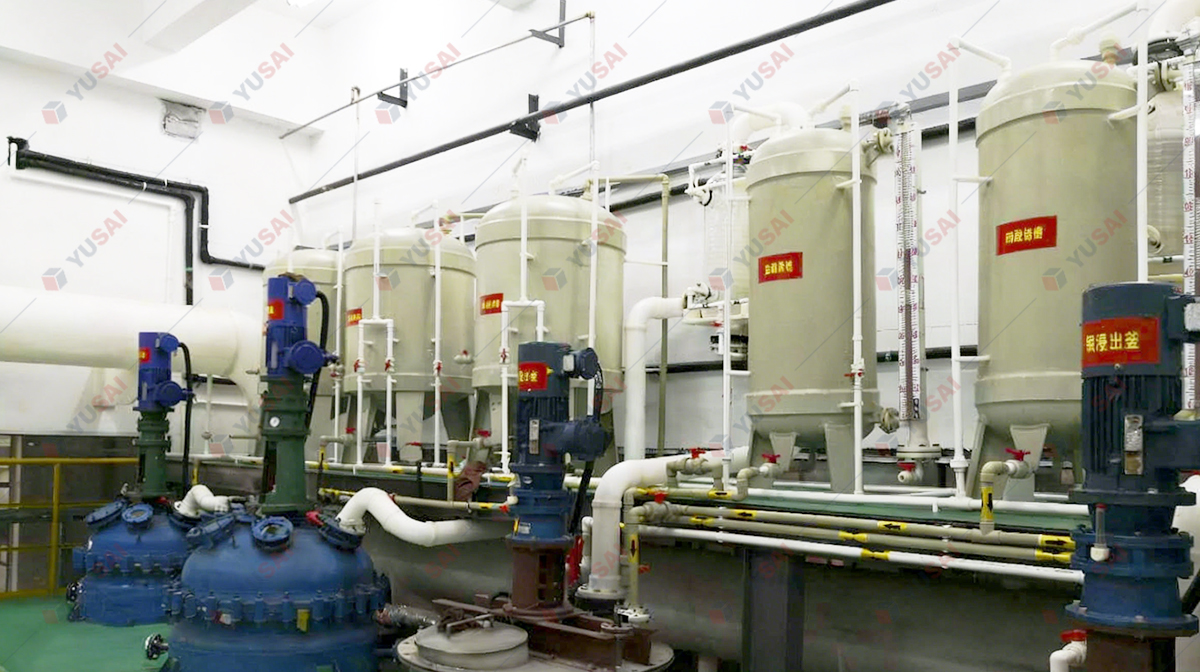
III. Convenient and Time-Saving Operation for Workers:
1) Mechanical loading: After electrolysis, the electrolyte is first returned to the low-level circulation tank via a solid-liquid separation device. Silver powder falls directly onto the transport vehicle for washing and ingot casting, reducing worker workload.
2) Automatic stirring device: Silver powder produced on the cathode plate is automatically scraped off, eliminating the need for manual scraping. The U-shaped groove on the side of the tank effectively prevents short circuits between the cathode and anode, improving the reliability of the electrolytic cell operation and further reducing worker workload.
IV. Energy Conservation:
1) High-efficiency silver electrolysis features automatic stirring and a U-shaped device, avoiding short circuits between the anode and cathode. This significantly reduces the amount of silver powder in the anode bag, saving a large amount of nitric acid when treating anode sludge. According to current statistics, the daily nitric acid consumption for boiling anode sludge has decreased from 400 kg/day to 300 kg/day.
2) Reducing daily nitric acid consumption by 100 kg results in a reduction of 36.5 kg of nitrogen oxides per day. Based on previous data and an air volume of 7000 m³/hour, this translates to a decrease of 1738 mg/m³ in nitrogen oxide content. The reduced nitrogen oxide emissions save on subsequent treatment costs.
V. Improved Electrolytic Cell Operation Stability: The new silver electrolytic cell adopts a novel electrolyte circulation method, changing the electrolyte’s flow direction within the cell. It uses a bottom-in, top-out flow parallel to the anode and cathode arrangement, effectively reducing concentration polarization between the electrodes. While ensuring the silver powder quality meets national standard No. 1 silver, it significantly increases the current density during electrolysis and reduces the silver ion concentration in the electrolyte.
Advantages:
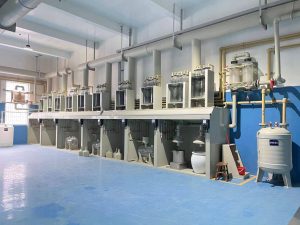
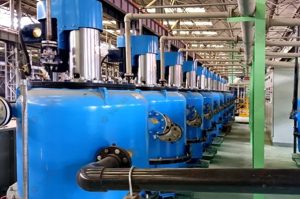
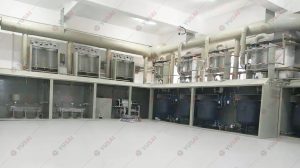
Sealed electrolytic cell with side-extraction of flue gas;Daily production capacity: 100 kg/day per cell (600 liters electrolyte); 200 kg/day (1000 liters electrolyte); 300 kg/day (1500 liters electrolyte);Small footprint;Single-cell electrolysis, targeting different anodes, preventing cross-contamination of produced silver powder.