Value Of Electronic Waste Recycling
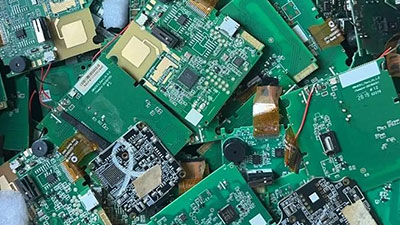
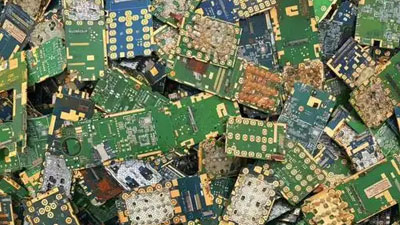
Electronic waste includes waste products, scraps, and discarded printed circuit boards from the manufacturing of electronic components and parts, as well as obsolete computers, appliances, and mobile phones. Every year, millions of computers, televisions, and other household appliances, and tens of millions of mobile phones are discarded, containing significant amounts of precious metals. Roughly estimated, 5 million computers contain approximately 4.2 tons of Au, 30 tons of Ag, and 1.5 tons of Pd. 50 million mobile phones contain approximately 140 kg of Au, 1 t of Ag, and 50 kg of Pd, totaling 4.34 tons of Au, 31 tons of Ag, 1.55 tons of Pd, and a small amount of Pt. This represents a substantial amount of resources, and many small businesses and workshops in China are actively engaged in recycling. However, the primary focus of electronic waste recycling is on Au, Ag, Pd, and Pt, with the latter accounting for only a small percentage of the total secondary resource recycling volume. From the point of circular economy, these discarded electronic waste still has the very high value.
Electronic waste is characterized by its large volume, low-grade precious metals, and complex composition, containing significant amounts of Cu, Sn, Pb, as well as bakelite and plastics. Workshop-style recycling primarily uses incineration to decompose bakelite and plastics. The slag is dissolved in calcined acid or aqua regia, and precious metals are then separated and recovered from the solution. This method has low material utilization and precious metal recovery rates, and causes severe environmental pollution. We have mature and environmentally friendly recycling technology and professional recycling plants.
Raw Materials
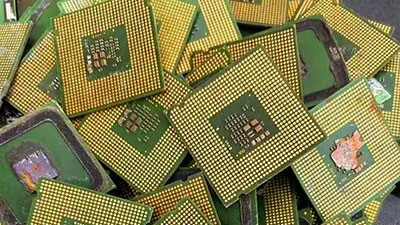
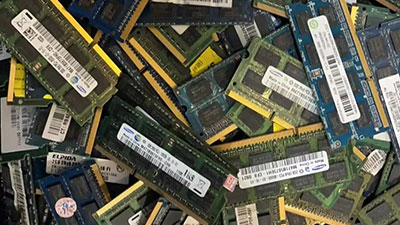
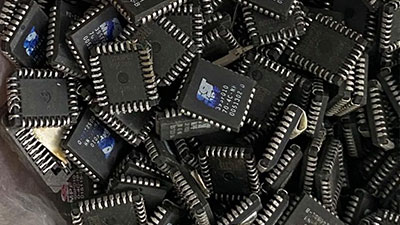
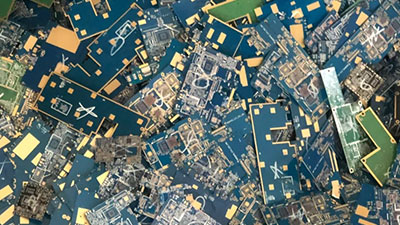
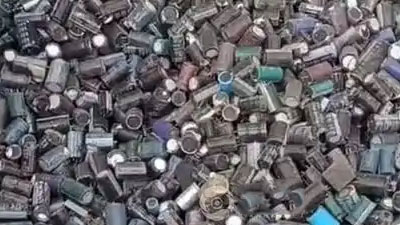
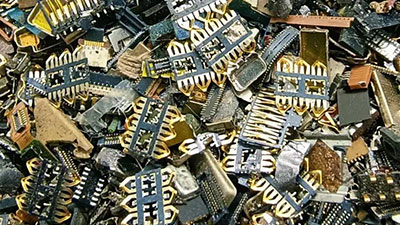
The raw materials consist of various precious metal-containing chips and anode mud, mainly including CPUs, communication boards, computer boards, RAM, MLCCs, northbridge and southbridge chips, memory chips, and surface-mount capacitors.
Final Product
Gold, silver, palladium, platinum, and other precious metals are recycled and extracted from electronic waste.
Solutions
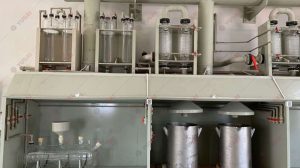
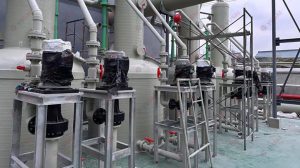
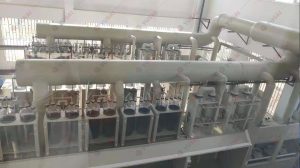
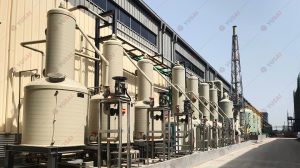
Henan YuSai Precision Machinery Co., Ltd. provides efficient solutions for extracting precious metals from e-waste. The following details several commonly used solutions and their key equipment:
1. Pyrometallurgy
Working Principle
Separates precious metals from impurities through high-temperature smelting, leveraging differences in metal melting points for enrichment or extraction.
Process
— Pretreatment: Crushing and sorting e-waste to remove non-metallic components.
— Smelting: Melting metals into alloys using high-temperature furnaces (e.g., arc furnaces, induction furnaces) with flux agents (e.g., borax, sodium carbonate).
— Refining: Isolating precious metals via electrolysis or chemical methods (e.g., electrolytic refining of gold and silver).
Main Equipment
— Crusher: Mechanically breaks down e-waste (e.g., circuit boards).
— Smelting Furnace: Induction furnace, arc furnace (temperatures exceed 1200°C).
— Electrolytic Cell: Purifies precious metals through electrolysis.
2. Hydrometallurgy
Working Principle
Dissolves precious metals using chemical solvents, followed by separation via displacement, precipitation, or extraction.
Process
— Pretreatment: Mechanical shredding and magnetic separation of metals from non-metals.
— Leaching: Dissolving precious metals with solvents (e.g., nitric acid for silver).
Separation and Purification
— Chemical Precipitation: Adding reducing agents (e.g., sodium sulfite) to precipitate metals.
— Solvent Extraction: Selectively isolating metal ions with extractants.
Main Equipment
— Reactor: Acid/alkali-resistant containers (e.g., FRP reaction tanks).
— Filtration Equipment: Filter press, centrifuge.
— Extraction Equipment: Centrifugal extractors, mixer-settlers.
3. Mechanical-Physical Separation
Working Principle
Separates precious metal particles based on physical properties (density, magnetism, conductivity).
Process
— Crushing: Shredding e-waste into fine particles.
— Eddy Current Separation: Isolates non-ferrous metals (e.g., copper, aluminum).
— Electrostatic Separation: Leverages conductivity differences to sort precious metals.
— Gravity Separation: Uses density differences (e.g., shaking tables, centrifuges).
Main Equipment
— Eddy Current Separator: Separates non-ferrous metals.
— High-Voltage Electrostatic Separator: Sorts micron-level metal particles.
— Centrifugal Shaking Table: Density-based sorting.
4. Electrolysis
Working Principle
Electrochemically deposits precious metals from ionic solutions (commonly used in refining).
Process
— Pretreatment: Dissolving precious metals into ionic solutions (e.g., cyanide gold solution).
— Electrolysis: Applying electric current in an electrolytic cell to deposit metals onto the cathode.
Main Equipment
— Electrolytic Cell: Corrosion-resistant materials (e.g., titanium or graphite electrodes).
— DC Power Supply: Provides stable current.
If you are planning to start a business recycling precious metals from e-waste, we, as a professional precious metal recycling equipment supplier, can provide you with customized solutions.
Technical Parameter
If you have other requrement and want to know more details, please contact us.(The data in this table are for reference only)
| Capacity | Recommended Solution |
| 0.05-100ton/day | Pyrometallurgy |
| 0.1-1000ton/day | Hydrometallurgy |
| 0.1-1000ton/day | Electrolysis |
| 0.1-5ton/day | Mechanical-Physical Separation |