Recovery Value
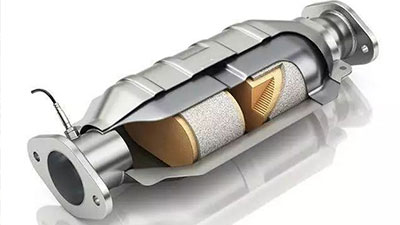
Due to the unique purification capabilities of platinum group metals (PGMs) in automotive exhaust systems, over 60% of the global annual consumption of platinum (Pt), palladium (Pd), and rhodium (Rh) is used in automotive exhaust purification catalysts. Spent automotive exhaust catalysts are regarded as “mobile platinum group metal mines,” and the regeneration and recovery of PGMs from these materials have become a major secondary resource recycling industry worldwide.
Raw Materials
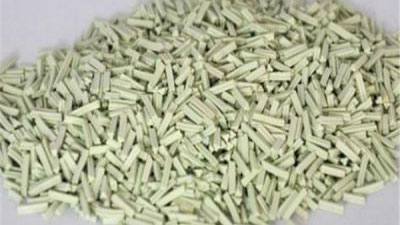
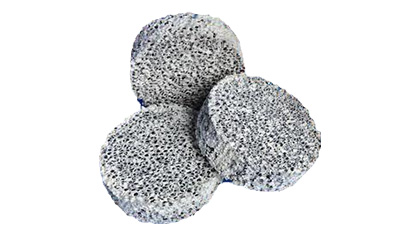
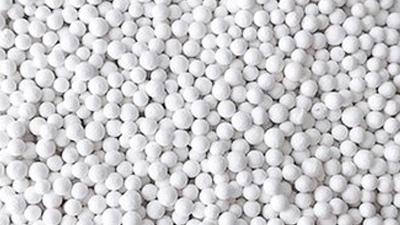
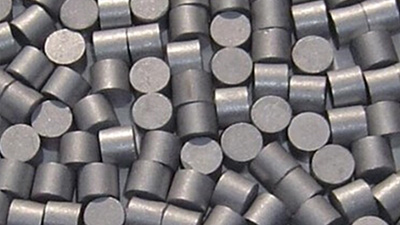
Three-way catalyst,Desulfurization catalyst,Ozone catalyst,Activated alumina.
Final Product
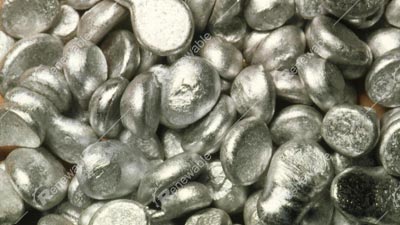
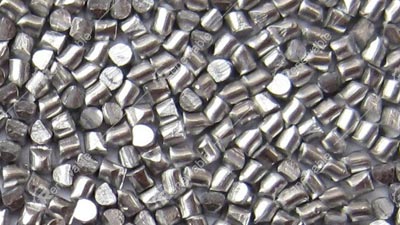
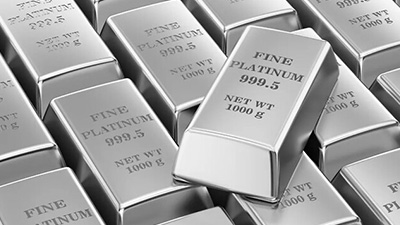
Platinum,Palladium,Rhodium,Rhenium
Spent catalysts containing Pt/Pd/Rh are extracted and reused in applications such as ternary catalysts, petroleum catalysts, activated alumina, desulfurization catalysts, ozone catalysts, and recycled automotive exhaust catalysts. The final products of Pt/Pd/Rh extraction from spent catalysts are precious metals, including palladium, platinum, and rhodium.
Solutions
Recovery of Pt Pd and Rh from Spent Automotive Exhaust Catalysts Process
The treatment of spent automotive exhaust catalysts is challenging due to their variable composition and high impurity content. Current recovery methods for Pt, Pd, and Rh from these catalysts are divided into two categories: pyrometallurgical smelting and hydrometallurgical leaching, with large-scale recycling plants predominantly adopting pyrometallurgical methods.
1. Hydrometallurgical Leaching
Direct oxidative acid leaching for Pt, Pd, and Rh extraction
The use of HCl + Cl₂ to dissolve PGMs (known as “aqueous chlorination”) is a common technique in precious metal metallurgy. The spent catalyst is finely ground, and an oxidizing agent or chlorine gas is introduced into a hydrochloric acid medium under heating and stirring to dissolve the PGMs. Advantages include simple technology and scalability in acid-resistant enamel reactors. The leachate can undergo secondary enrichment via displacement or precipitation to yield a PGM concentrate, which is then separated and refined into final products.
2. Pyrometallurgical Smelting
Process
— Pretreatment: Mechanical shredding and magnetic separation of metals from non-metals.
— Leaching: Dissolving precious metals with solvents (e.g., nitric acid for silver).
Separation and Purification
— Chemical Precipitation: Adding reducing agents (e.g., sodium sulfite) to precipitate metals.
— Solvent Extraction: Selectively isolating metal ions with extractants.
Main Equipment
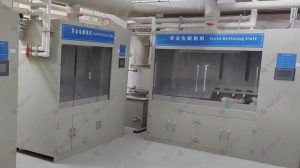
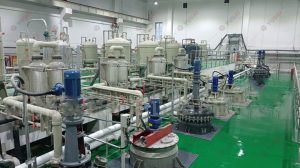
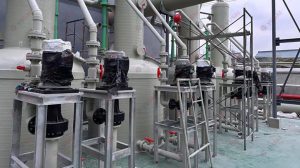
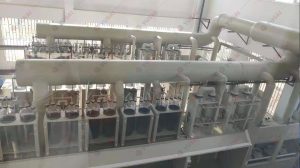
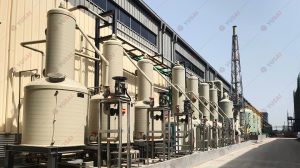
— Reactor: Acid/alkali-resistant containers (e.g., FRP reaction tanks).
— Filtration Equipment: Filter press, centrifuge.
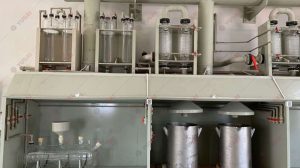
— Extraction Equipment: Centrifugal extractors, mixer-settlers.
3. Mechanical-Physical Separation
Working Principle
Separates precious metal particles based on physical properties (density, magnetism, conductivity).
Process
— Crushing: Shredding e-waste into fine particles.
— Eddy Current Separation: Isolates non-ferrous metals (e.g., copper, aluminum).
— Electrostatic Separation: Leverages conductivity differences to sort precious metals.
— Gravity Separation: Uses density differences (e.g., shaking tables, centrifuges).
Main Equipment
— Eddy Current Separator: Separates non-ferrous metals.
— High-Voltage Electrostatic Separator: Sorts micron-level metal particles.
— Centrifugal Shaking Table: Density-based sorting.
4. Electrolysis
Working Principle
Electrochemically deposits precious metals from ionic solutions (commonly used in refining).
Process
— Pretreatment: Dissolving precious metals into ionic solutions (e.g., cyanide gold solution).
— Electrolysis: Applying electric current in an electrolytic cell to deposit metals onto the cathode.
Main Equipment
— Electrolytic Cell: Corrosion-resistant materials (e.g., titanium or graphite electrodes).
— DC Power Supply: Provides stable current.
If you are planning to start a business recycling precious metals from e-waste, we, as a professional precious metal recycling equipment supplier, can provide you with customized solutions.
Technical Parameter
If you have other requrement and want to know more details, please contact us.(The data in this table are for reference only)
| Capacity | Recommended Solution |
| 0.05-100ton/day | Pyrometallurgy |
| 0.1-1000ton/day | Hydrometallurgy |
| 0.1-1000ton/day | Electrolysis |
| 0.1-5ton/day | Mechanical-Physical Separation |