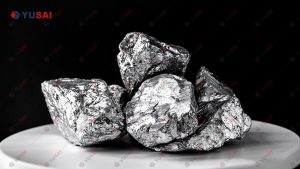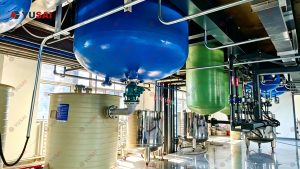
Gold has always been one of the most valuable precious metals in the world, widely used in investment collection, electronic manufacturing, aerospace and high-end jewelry industries. In various industrial and commercial scenarios, the purity of gold directly determines its application value and market price. Ordinary refined gold can hardly meet the strict standards of high-end industries, while 99.999% ultra-high purity gold has become the core demand of the precision manufacturing and precious metal recycling fields. So how is top-tier high-purity gold produced in modern industry? The answer lies in professional intelligent gold electrolysis refining technology.
For a long time, traditional gold refining methods have many unavoidable drawbacks. The primitive pyrometallurgy and manual refining processes rely heavily on operational experience, with rough purification procedures and severe technical limitations. Traditional fire refining only delivers a maximum gold purity of 99.0%–99.5%, failing to eliminate trace impurities including copper, silver, and iron. Such low purity cannot meet the standards of high-end industrial manufacturing. Worse still, traditional processes suffer from extremely high metal loss, with a gold loss rate of 3%–8% and an overall recovery rate of merely 92%–97%. Single-batch refining takes 24–48 hours with heavy manual intervention, resulting in unstable product quality and low productivity. These backward methods can no longer adapt to the standardized and large-scale production needs of the modern gold processing industry, especially under the new global resource and trade landscape.
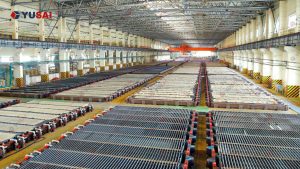
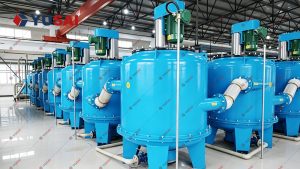
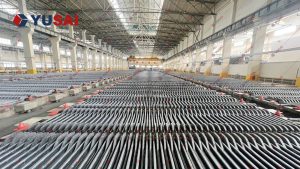
Against the backdrop of intensifying global resource shortages and tightening international trade barriers, the global precious metal industry is undergoing a profound structural transformation. According to industry data, the global precious metal recycling market reached USD 36.5 billion in 2026 and is projected to grow at a CAGR of 7.9% until 2033. Frequent geopolitical conflicts, raw material supply monopolies, and fluctuating international gold prices have pushed countries worldwide to attach strategic importance to precious metal recycling and high-purity refining. The EU’s Critical Raw Materials Act and updated WEEE Directive mandate over 80% metal recovery efficiency for industrial precious metal processing, while global recycled gold now accounts for27% of total global gold supply, becoming a core supplementary source of mineral gold. Under this global trend, Henan Yusai Precision Machinery Co., Ltd. has independently developed and upgraded intelligent gold electrolysis refining machines, completely subverting the traditional gold refining model and realizing a qualitative leap in gold purification efficiency and purity. Different from traditional processing technology, the core principle of electrolysis refining is to use electrochemical reaction to accurately separate gold from miscellaneous metals. Through precise intelligent control of current, voltage, solution concentration and electrolysis time, the equipment achieves selective purification of gold, removes almost all trace impurities, and stably outputs 99.999% ultra-high purity gold (5N) with total impurity content controlled below 0.001%, fully complying with international high-end industrial standards.
Intelligent automation is the biggest advantage of the new generation of gold electrolysis refining equipment, solving the pain points of unstable quality in traditional manual production. The whole refining process requires no repeated manual debugging. The built-in intelligent control system monitors equipment operation in real time and dynamically adjusts process parameters, maintaining a constant electrolysis environment throughout production. Compared with traditional manual refining with a batch purity error of ±0.5%–1%, the intelligent electrolysis system controls the batch purity error within ≤0.001%, ensuring uniform and qualified ultra-high purity gold for every production batch. This standardized and intelligent production mode perfectly adapts to strict international commodity inspection and industrial certification requirements, helping processing enterprises break through global technical and quality thresholds in cross-border trade.
In terms of production benefits, intelligent electrolysis refining technology shows unparalleled economic advantages, which is crucial for enterprises to cope with rising global raw material and labor costs. Traditional processes have high raw material loss, while intelligent electrolysis reduces the gold loss rate to within 0.3% and boosts the comprehensive recovery rate to over 99.7%. Compared with traditional technology, each ton of raw materials can recover an additional 3–8 grams of pure gold, greatly improving economic benefits. Meanwhile, the fully automated production shortens the single-batch refining cycle from 24–48 hours to 8–12 hours, increasing comprehensive production capacity by more than 300% and supporting 24-hour stable unmanned operation. In the context of global tight gold supply and soaring gold prices, high recovery rate and high-efficiency production have become the core competitive advantages of modern gold processing enterprises in the international market.
In addition to high precision and high efficiency, professional intelligent gold refining equipment also meets the global mainstream trend of green environmental protection and low-carbon development. With the global implementation of carbon tariffs and increasingly strict international environmental protection standards, traditional high-pollution and high-consumption refining processes are gradually being eliminated. The closed intelligent electrolysis design realizes 100% recovery of waste gas and liquid, reduces chemical reagent consumption by more than 40% and overall energy consumption by 25%. It completely avoids chemical leakage and environmental pollution risks, reduces manual high-risk operation time by 90%, and fully complies with EU environmental regulations and global industrial safety production specifications, helping enterprises avoid international green trade barriers.
It is well known that professional things need professional equipment and technology to complete. In the field of high-purity gold refining, blind manual processing and backward traditional processes can only obtain low-purity finished products with limited value. As a professional precision machinery manufacturer focusing on precious metal refining equipment, Henan Yusai Precision Machinery Co., Ltd. insists on technological innovation and process optimization. Only relying on our professional intelligent electrolysis refining equipment can factories and recycling enterprises stably produce 99.999% ultra-high purity gold, truly realize efficient, safe and high-benefit gold purification processing.
At present, driven by global resource security strategies and green trade policies, the intelligent gold electrolysis refining solution launched by Henan Yusai Precision Machinery Co., Ltd. has become a mainstream choice for high-end gold processing worldwide, widely applied in global precious metal processing factories, mineral refining workshops, and gold recycling enterprises. As geopolitical uncertainties continue to increase and the global supply chain of mineral gold becomes unstable, high-standard recycled high-purity gold has become an important strategic resource for the aerospace, semiconductor, and precision electronics industries. Relying on our professional intelligent refining equipment to achieve independent and controllable high-purity gold production can effectively help enterprises and regional industries resist international supply chain risks, stabilize product quality and market competitiveness. In the future, with continuous technological iteration, Henan Yusai Precision Machinery Co., Ltd. will further optimize equipment energy efficiency and recovery indicators, providing more efficient, greener, and more reliable processing solutions for the global precious metal industry and promoting the standardized, intelligent, and sustainable development of the international gold refining sector.