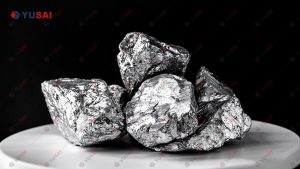
Platinum-group metals (PGMs), including platinum, palladium, rhodium and other precious metals, feature outstanding catalytic performance, high-temperature resistance and corrosion resistance. They are widely applied in traditional industries, high-tech sectors and military industries, serving as indispensable strategic metals for modern industrial systems. Restricted by the global distribution of mineral resources, primary PGM deposits are highly concentrated in a small number of countries, forming a notable resource monopoly. Against this backdrop, tapping the potential of PGM secondary resources and advancing their regeneration and recycling industry carries great practical significance for securing resource supply and participating in global resource competition.

PGM secondary resources come from a wide range of sources with diverse categories, showing huge differences in grade and physicochemical properties. The vast majority require metallurgical regeneration for recovery and reuse. These resources are mainly waste materials retired or scrapped from various industrial sectors. In a broader sense, they also cover civilian PGM jewellery, ornaments, commemorative coins and collected platinum ingots. Civilian collected secondary resources are well preserved with negligible metal loss and stable quality. Complex metallurgical regeneration is unnecessary. Under special circumstances of industrial raw material shortage, they may be purchased and fed directly into industrial production chains.
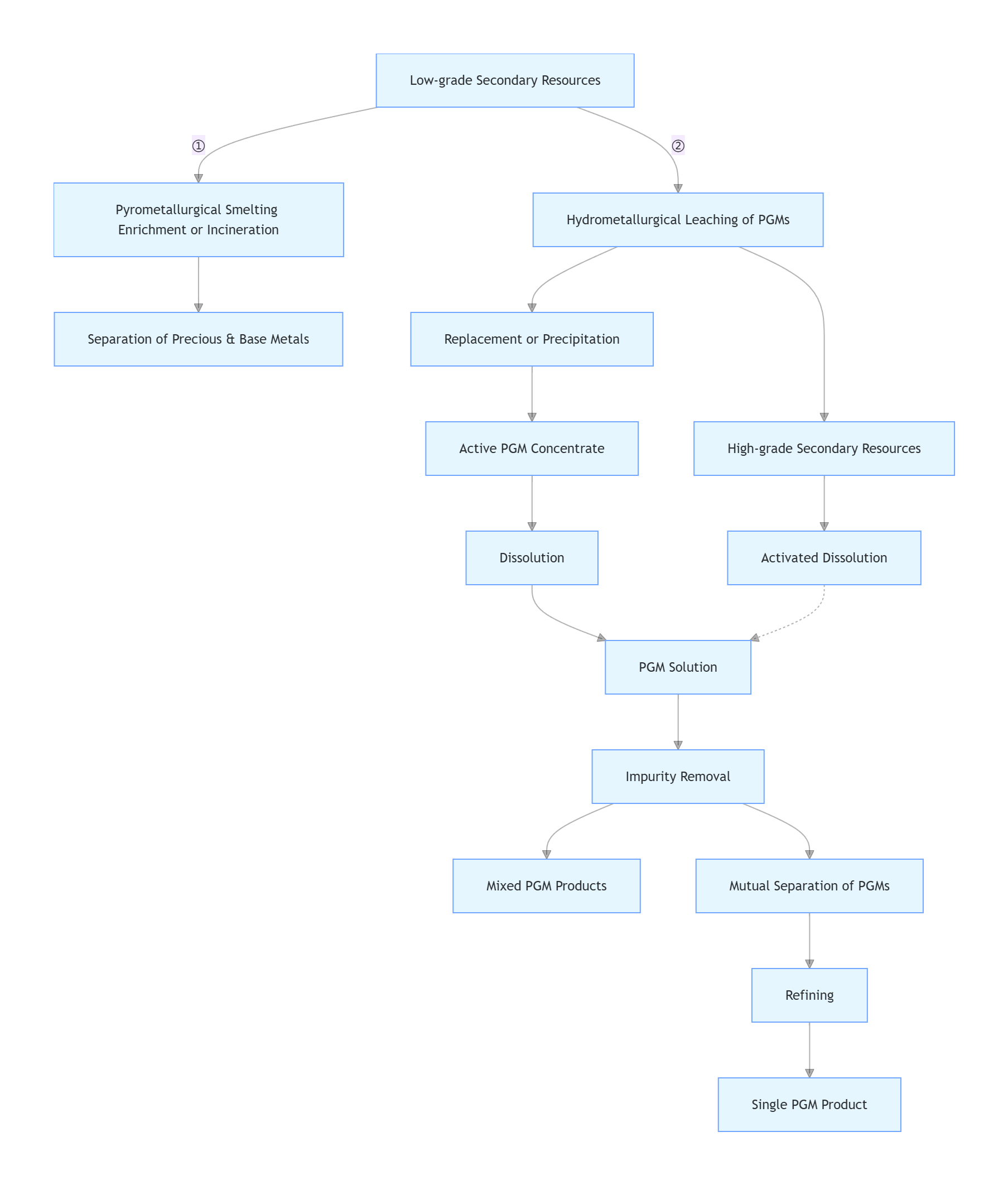
According to material grade and physical-chemical characteristics, industrial PGM secondary resources fall into two categories: high-grade and low-grade secondary resources. High-grade secondary resources mostly refer to spent platinum-group metals and their alloy functional materials contaminated by only a small amount of impurities. The core of their recycling process lies in rapid and efficient dissolution, followed by separation and purification from high-concentration PGM solutions to produce metallic elementary substances or corresponding compound products.
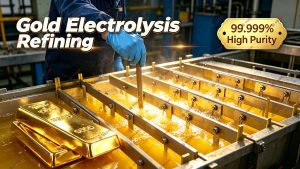
Low-grade secondary resources mainly consist of spent catalysts, waste liquids, residues and similar materials. The priority for treating such feedstock is removing large volumes of non-precious-metal impurities to enrich precious metals into PGM concentrates. Dissolution is then carried out, and high-purity platinum-group metal products are finally obtained via separation and refining. Compared with primary mineral ores, low-grade PGM secondary resources possess unique advantages. Their precious-metal grades are generally far higher than those of natural ores; even low-grade wastes are hundreds to thousands of times richer than ore bodies. Non-precious-metal matrices are relatively simple, mainly alumina, activated carbon, organic polymers and other simple components. Coexisting precious-metal species are limited, usually containing one or two of platinum, palladium and rhodium, and rarely all three together. Thanks to these features, metallurgical recycling of secondary resources is simpler than primary ore smelting, with lower capital investment, shorter processing cycles and faster capacity ramp-up to meet market raw material demands.
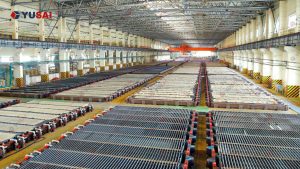
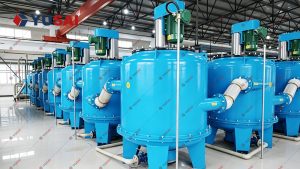
The ultimate goal of developing PGM recycling technologies is to build a mature industrial chain and compete on a global scale. An industrially viable recycling process must satisfy multiple rigorous requirements. First, the technical principles shall be scientifically sound with solid theoretical foundations. Second, the whole process route shall be complete, covering every technical link from raw material pretreatment to finished-product output. Third, key technical indicators such as overall metal recovery rate, product portfolio and purity shall reach advanced levels. Fourth, occupational safety and environmental protection measures shall be well established. Waste gas, wastewater and solid waste treatment shall comply with the requirements of green circular economy and sustainable development. Fifth, supporting engineering equipment shall be fully equipped, enabling industrial operation to deliver both favourable economic and social benefits.
Global competition for PGM resources is intensifying. The monopoly over primary mineral deposits has driven all nations to focus on secondary resources. Economically advanced countries lacking native PGM resources attach great importance to the PGM recycling industry and classify platinum-group metals as strategic metal reserves. Relevant enterprises strive on two fronts: securing secondary-resource feedstock and guarding core engineering know-how. They seize raw material supplies and prevent valuable resources from falling into competitors’ hands. Critical process parameters and equipment configurations are treated as proprietary know-how, seldom disclosed to the public, and technical visits and exchanges are rarely welcomed. Even when patents are filed or papers published, applicants often adopt broad technical condition ranges or omit vital process steps to safeguard trade secrets. Nevertheless, academic research in this field remains active, generating abundant literature summarising recycling routes and industry trends to support continuous technical upgrading.
China is poor in primary PGM mineral reserves yet has grown into one of the world’s major PGM consumers amid industrial expansion. Faced with supply-demand imbalance, regeneration and recycling of PGM secondary resources occupies a strategically important position in balancing domestic supply and demand, and China’s recycling industry has already been deeply integrated into international market competition. While accelerating R&D and industrial expansion, China should optimise its precious-metal reserve framework, continuously increase state stockpiles of platinum-group metals, and introduce supportive policies to encourage private reserves. Following the strategy of “storing gold among the people” and “storing platinum among the people”, we can build a multi-layered safeguard system for national PGM resource security.
Global primary platinum-group metal deposits are highly concentrated. A small number of countries including South Africa and Russia dominate most mining output. Geopolitical conflicts, resource nationalism, export restrictions and adjustments to mining policies continuously disrupt global supply chains. Primary mine supply shows low elasticity, keeping the market in a prolonged tight balance. Together with steadily rising demand from hydrogen energy, automotive emission catalysis, electronic manufacturing and other emerging sectors, the security risks of a model relying solely on virgin mining keep growing. Countries worldwide have listed PGMs as critical strategic minerals and vigorously developed secondary-resource recycling industries. Recycled materials have become a core measure to hedge geopolitical risks.
Industrialized economies in Europe, America and Japan have established collection systems covering spent catalysts and e-waste through mature Extended Producer Responsibility (EPR) frameworks. Policies such as mandatory recycling targets and low-carbon tariffs are introduced to raise the share of recycled feedstock across industrial chains. The EU Critical Raw Materials Act sets explicit targets for recycled PGM consumption by 2030. The United States and Japan have also invested in recycling infrastructure and R&D, incorporating PGM regeneration into national supply-chain security strategies. Meanwhile, leading multinational precious-metal corporations control premium scrap streams and advanced refining technologies accumulated over decades. They build competitive moats via proprietary know-how, patent barriers and long-term supply agreements, retaining dominance in international scrap trade, refining and product supply.
Cross-border flows of PGM scrap are becoming increasingly complicated. Import-export supervision, environmental access rules and trade barriers are tightening globally, raising costs for overseas scrap procurement, transportation and customs clearance. The global secondary-resource market is moving toward regionalization and bloc-based cooperation. On one hand, developed economies seek closed-loop supply chains and pursue friend-shoring to consume secondary resources within allied blocs. On the other hand, emerging industrial nations face fast-growing consumption and heavy reliance on imported ores and foreign scrap, which intensifies competition for raw materials.
Under this international landscape, competition over platinum-group metals extends far beyond mining. It now covers the whole industrial chain: scrap collection networks, enrichment and refining technologies, low-carbon production capacity and strategic stockpile systems. For China, external supply uncertainty keeps mounting. Accelerating the development of a self-reliant PGM recycling industry, improving domestic collection channels, mastering core refining technologies and building a multi-tier reserve system not only narrows the supply-demand gap, but also serves as a strategic move to engage in global resource governance and strengthen international bargaining power.