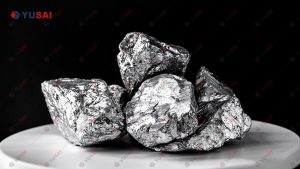
Few people know that waste lithium batteries are known as “urban mines”, containing abundant high-value metals inside. Nickel, cobalt, lithium and manganese precious metals are the core profit sources of power battery recycling.
Retired EV battery packs can be dismantled into single cells, which account for about 70% of the total weight of the battery pack. The most valuable part of the cell is cathode material. For ternary lithium batteries, cathode material takes up roughly 40% of cell weight, varying for different battery models.
Cathode material is rich in four vital metals: nickel, cobalt, lithium and manganese. Taking widely-used NCM523 cathode material as an example: one ton of cathode material contains 304kg nickel, 122kg cobalt, 171kg manganese and 72kg lithium. Nickel, cobalt and lithium carry the highest value, forming the main profit point of retired power battery recycling industry.
Market reference: Waste ternary lithium batteries are valued at about 38,000 RMB per ton. After crushing, sorting and extracting nickel, cobalt, lithium and manganese precious metals, refined cathode black powder can reach 63,000 RMB per ton.
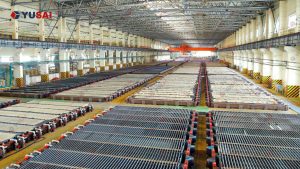
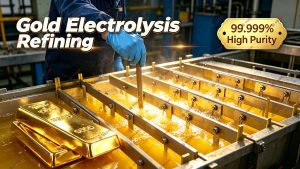
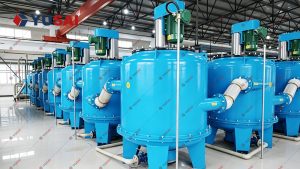
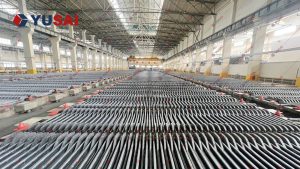
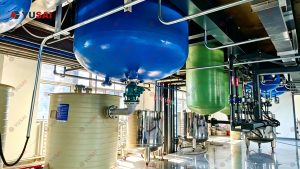
The price gap comes from resource concentration through physical separation and purification. Efficient and compliant metal extraction relies on professional complete recycling equipment. Henan Yusai Precision Machinery Co., Ltd. specializes in manufacturing complete production equipment for precious metal extraction from waste lithium batteries. Our integrated production line supports battery crushing, sorting and purification, realizing high-efficiency recovery of nickel, cobalt, lithium and manganese to help recyclers improve powder purity and economic benefits.
Friendly reminder: Recycling profits are affected by metal price fluctuation, raw material quality, processing cost and environmental compliance, so stable profit is not guaranteed. As large quantities of EV batteries reach retirement age, recovering nickel, cobalt, lithium and manganese from ternary lithium batteries with professional equipment becomes a promising circular economy sector.