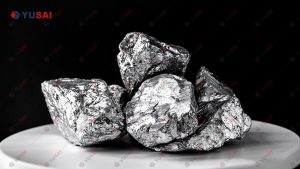
Platinum group metals (PGMs), including platinum, palladium, rhodium, iridium, osmium, and ruthenium, possess exceptional thermal stability, corrosion resistance, and catalytic performance, serving as vital strategic materials for automotive catalysis, aerospace, fine chemicals, and new energy industries. Due to scarce primary resources and high mining costs, secondary recovery from spent catalysts and metallurgical residues has become essential for sustainable PGM supply. As a dominant and mature technology, wet leaching features mild conditions, high selectivity and high product purity, and has been widely adopted in industrial practice and academic research. This article concisely introduces the technical principle, mainstream leaching routes, process characteristics, and future development trends of PGM hydrometallurgical recovery.
1. Core Technical Essence of PGM Wet Leaching
PGMs exhibit extremely high chemical inertness, which cannot be dissolved by conventional acid–base systems and renders their recovery challenging. The fundamental principle of wet leaching is to destroy stable metallic bonds using acidic media coupled with strong oxidants or specific complexing reagents. Solid PGMs are stripped from carrier matrices and converted into soluble metal complex ions in aqueous solution. Subsequent enrichment, solvent extraction, purification, and reduction enable the production of high-purity PGM products from low-concentration leachate.
The dissolution mechanism relies on a synergistic oxidation–coordination effect. Strong oxidants activate inert PGM surfaces and provide oxidation driving force, while chloride ions in hydrochloric acid solution form stable chloro-complexes (e.g., hexachloroplatinate, tetrachloropalladate, hexachlororhodate) to stabilize dissolved metal ions and promote continuous leaching. Besides the mainstream HCl–oxidant system, cyanide-based reagents can also achieve efficient PGM dissolution via complexation, offering adaptability for special raw materials.
The overall wet leaching process consists of three key procedures: (1) pretreatment, including crushing, roasting and decontamination to remove carbon, sulfur and organic impurities and expose active PGM sites; (2) selective wet leaching to transfer PGMs into liquid phase; (3) solution purification and upgrading via extraction, ion exchange, precipitation and reduction to obtain metallic or salt products.
2. Mainstream Types of PGM Wet Leaching Processes
Based on reagent systems and operating conditions, current PGM wet leaching technologies are classified into three major types, which differ significantly in recovery efficiency, cost, operational difficulty and environmental compatibility.
2.1 Hydrochloric Acid-Strong Oxidant Leaching Process
The hydrochloric acid–strong oxidant route is the most prevailing industrial process. With concentrated HCl as the coordination medium and oxidants such as sodium chlorate, hydrogen peroxide, chlorine or nitric acid, PGMs are efficiently dissolved and stabilized as soluble chloro-complexes, effectively preventing hydrolysis and precipitation.
The reaction proceeds under atmospheric pressure at 60–95 ℃ for 4–12 h with low equipment requirements and strong adaptability to spent automotive and industrial catalysts. Industrial results show Pt and Pd leaching rates exceed 99%, and rhodium reaches above 96%. Adjustable parameters including oxidant dosage, temperature and liquid–solid ratio ensure stable performance for variable feed materials, making it the preferred industrial process.
2.2 Cyanide Leaching Process
Cyanide leaching adopts sodium cyanide and other cyanide agents under weak alkaline and moderate-temperature conditions to realize efficient complexation and dissolution of passivated and oxidized PGMs. This process features high adaptability and recovery rate (Pt recovery > 95%) with no gaseous emissions during reaction.
Nevertheless, severe safety and environmental limitations restrict its large-scale application. Cyanide reagents are highly toxic, requiring rigorous safety management and sophisticated wastewater treatment. Complex waste liquid components and high treatment costs lead to prominent environmental risks, limiting this method only to few high-end fine recycling scenarios.
2.3 New Green Wet Leaching Process
Novel green leaching technologies, including thiourea leaching, halide leaching and bioleaching, have been developed to replace toxic and corrosive traditional systems. These low-toxic, environmentally friendly routes effectively reduce secondary pollution. However, drawbacks such as slow leaching kinetics, unstable recovery efficiency and high cost restrict their large-scale industrialization, and most are currently under laboratory and pilot-scale investigation.
3. Comprehensive Comparison Between Wet Leaching and Pyrometallurgy
PGM recovery technologies are mainly divided into pyrometallurgy and hydrometallurgy. Both can achieve effective PGM recovery but differ greatly in technical economy, operational difficulty and environmental performance, suitable for different feedstock and production scenarios.
Pyrometallurgy realizes PGM enrichment and separation via high-temperature smelting and slagging, suitable for high-impurity and large-volume raw materials. Its main disadvantages include ultra-high energy consumption above 1000 ℃, PGM volatilization loss, substantial flue gas and residue pollution, and limited product purity, which usually requires subsequent hydrometallurgical refining, resulting in lengthy and costly processes.
In comparison, wet leaching exhibits comprehensive superiorities. It operates under mild atmospheric and low–medium temperature conditions with low energy consumption. Benefiting from high chemical selectivity, it preferentially dissolves PGMs while retaining most carrier impurities, simplifying purification and obtaining high-purity products. The flexible process is applicable for both large-scale production and small-batch refined recycling, with negligible high-temperature volatilization loss and higher overall recovery.
The main limitations of wet leaching are strict pretreatment requirements and wastewater treatment pressure. Excessive organic contaminants and heavy metals in raw materials inhibit leaching efficiency, and traditional acidic oxidative systems produce corrosive wastewater that requires complete supporting treatment facilities.
4. Industrial Application Value and Development Trends of Wet Leaching Processes
Under the background of resource recycling and low-carbon development, wet PGM recovery technologies possess outstanding application value. They reduce reliance on primary mineral resources and achieve efficient, low-energy and environmentally friendly PGM regeneration, well matching the green development trend of modern metallurgy.
Future development of PGM wet leaching will focus on three directions: green process upgrading via non-cyanide, low-toxic and recyclable reagent systems and closed-loop water circulation; intelligent and precise parameter control to improve recovery stability and reduce reagent consumption; and integrated short-flow processes combining pretreatment, efficient leaching, extraction and refining to simplify procedures and cut operational costs.
5. Conclusion
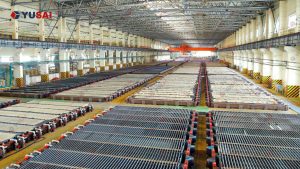
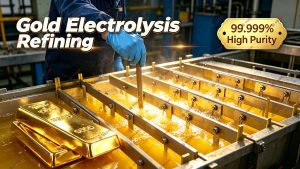
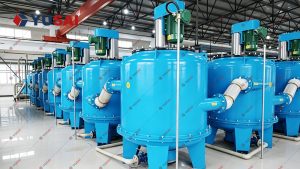
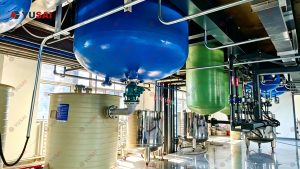
Wet leaching has become the mainstream technology for secondary PGM recovery due to its mild conditions, high efficiency and good adaptability. By utilizing oxidative and coordination reactions to break PGM chemical inertness, it realizes efficient separation of precious metals from carriers. Compared with pyrometallurgy, wet processes show better economic and environmental performance, despite minor limitations in pretreatment and wastewater management. With continuous green technological innovation, wet leaching will further dominate PGM recycling industries and provide reliable resource support for high-end manufacturing and new energy development. Henan Yusai Precision Machinery Co., Ltd. specializes in the full set of professional equipment for precious metal extraction and refining. The company provides integrated, high-efficiency and environmentally friendly supporting equipment covering the whole wet leaching process, including raw material pretreatment, selective leaching, solution purification, enrichment and finished product refining, which effectively matches the technical requirements of modern PGM hydrometallurgical recovery and helps enterprises achieve stable and high-yield precious metal recycling.