Catalysts are essential industrial materials that guarantee chemical reaction efficiency and product quality in petrochemical, fine chemical, automotive exhaust treatment and other key industrial sectors. Platinum-group precious metal catalysts containing platinum, palladium and rhodium are the most widely applied types in industrial production. After long-term service under high-temperature, high-pressure and corrosive operating conditions, catalysts gradually suffer from active site deactivation, carrier carbon deposition, structural damage and other failures, forming spent industrial catalyst waste. Owing to the scarcity, high economic value and recyclability of precious metals, the professional disposal and resource recovery of precious metals from spent catalysts have become a core part of industrial solid waste harmless treatment and precious metal resource cyclic utilization.
The complete industrial treatment process for spent precious metal catalysts consists of three systematic stages: precious metal enrichment, component separation and deep refining. The core technical principle remains consistent across the whole process. First, pyrometallurgical or hydrometallurgical technologies are adopted to separate catalyst carriers from precious metal components, so as to enrich low-concentration precious metals into high-value intermediate products and greatly reduce the scale of subsequent processing. After the acquisition of high-purity platinum-palladium-rhodium concentrates, mature and standardized separation and refining technologies are applied to produce finished precious metal products. Conventional selective precipitation, solvent extraction and solid-liquid extraction technologies are highly mature for downstream fine processing, ensuring stable separation accuracy and product purity.
1. Precious Metal Enrichment: The Core of the Whole Process
Precious metal enrichment is the most critical procedure in spent catalyst treatment. Spent catalysts contain only trace amounts of platinum-group metals, with most components being inert carriers and miscellaneous impurities. Direct separation and refining will lead to high energy consumption, low efficiency and poor product purity. Therefore, efficient separation of carriers and precious metals via professional enrichment technologies determines the overall recovery efficiency and economic benefits of the process.
Current industrial mainstream enrichment technologies are divided into two categories: pyrometallurgical smelting and hydrometallurgical leaching. Large-scale commercial precious metal recycling plants mainly adopt pyrometallurgical smelting enrichment due to its advantages of large processing capacity, strong adaptability and stable operation.
1.1 Pyrometallurgical Smelting Enrichment
Pyrometallurgical smelting is the dominant technology for large-scale industrial production. The process relies on high-temperature metallurgical reactions to realize effective separation of carriers and precious metals. After raw material pretreatment including crushing, sieving and decarbonization, the spent catalyst materials are mixed with professional flux and metal collectors, then sent to a high-temperature smelting furnace for melting treatment.
Under high-temperature conditions, carrier materials react with flux to form low-density slag that floats on the upper melt layer, while precious metal components combine with collectors to form high-density alloy sediments at the bottom of the furnace. After precise slag-metal separation, high-grade precious metal alloy concentrates are obtained, realizing efficient enrichment of scattered precious metal components. This technology is suitable for mass processing of various low-grade spent catalysts with strong impurity resistance and high industrial practicability.
1.2 Hydrometallurgical Leaching Enrichment
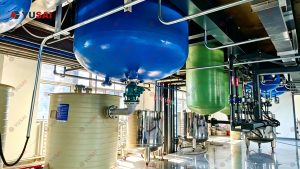
Hydrometallurgical leaching is a refined chemical enrichment technology applicable to small-batch and high-precision recycling scenarios. The process adopts targeted acid-base leaching agents to selectively dissolve and remove catalyst carriers and organic/inorganic impurities. Through procedures of roasting impurity removal, selective leaching and solid-liquid separation, precious metal components are retained and enriched in solutions, forming high-purity precious metal leachate.
Compared with pyrometallurgy, hydrometallurgical leaching features low-temperature operation, no high-temperature flue gas emission and mild reaction conditions. It is widely used for the fine treatment of high-value spent catalysts and is often combined with pyrometallurgical pretreatment to form a hybrid process for higher enrichment purity and recovery rate.
2. Precious Metal Component Separation
After the enrichment stage, most carrier impurities are removed, and the obtained platinum-palladium-rhodium mixed concentrates feature high precious metal concentration and small processing volume, creating favorable conditions for fine separation. The core purpose of the separation stage is to split mixed precious metal components into single platinum, palladium and rhodium crude products through mature technical means, eliminating mutual interference between different precious metals and laying a foundation for final refining.
Three mature and industrialized separation technologies are mainly adopted in the industry:
2.1 Selective Precipitation Method
As a traditional and widely used separation technology, selective precipitation utilizes the different chemical response characteristics of platinum, palladium and rhodium ions to specific precipitants. By accurately adjusting solution pH value, reaction temperature and reagent dosage, each precious metal component is precipitated step by step in sequence, realizing effective separation of multiple components. This technology features simple operation, low equipment investment and stable effect, suitable for conventional industrial batch production.
2.2 Solvent Extraction Method
Solvent extraction is a high-precision separation technology for precious metal processing. Relying on the selective coordination reaction between special organic extractants and precious metal complex ions, different precious metals are selectively transferred from aqueous phase to organic phase. Through multiple rounds of extraction and back-extraction circulation, high-purity single precious metal solutions are obtained. With high separation accuracy, low impurity entrainment and continuous production capacity, it is the core technology for high-end precious metal fine separation.
2.3 Solid-Liquid Extraction Method
Also known as ion exchange adsorption method, solid-liquid extraction uses high-selectivity resin and adsorption materials as solid-phase carriers. According to the selective adsorption difference of functional materials on different precious metal ions, target precious metals are selectively adsorbed, eluted and resolved to achieve component separation. This technology is excellent for deep impurity removal and fine separation of low-concentration precious metal solutions, often serving as an auxiliary refining process to further improve product purity.
3. Deep Refining and Finishing
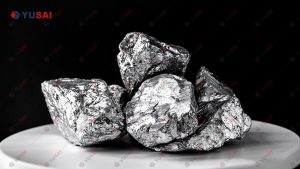
Single precious metal crude products separated by the above processes still contain trace impurities and fail to meet industrial high-purity standards. The deep refining stage is designed to remove residual impurities and upgrade crude products to high-purity finished precious metal materials. Supported by mature traditional refining technologies and precise parameter control, the process can stably produce precious metal products with purity up to 99.9% and above.
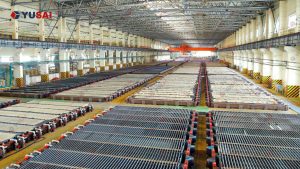
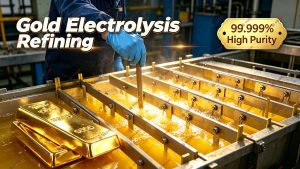
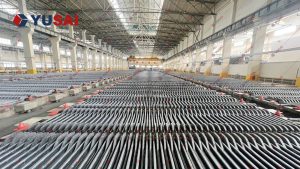
The refining process includes deep impurity removal, precise purification and product shaping. After secondary purification of crude materials, electrolytic refining, oxidative refining and deep fine extraction are applied for further purification. Finally, finished products such as high-purity precious metal monomers and precious metal salts are produced to realize full resource regeneration of spent catalysts.
4. Process Advantages and Industrial Application
The three-stage treatment system of enrichment, separation and refining forms a complete closed-loop process for spent catalyst precious metal recycling. The hierarchical treatment logic of “rough enrichment first, fine processing later” effectively reduces production costs, improves resource utilization rate and ensures stable product quality. The combined pyrometallurgical and hydrometallurgical enrichment mode, matched with diversified fine separation and refining technologies, can adapt to different material characteristics and production scale requirements, covering large-scale bulk processing and high-precision customized production.
Nowadays, this integrated process has become the mainstream technical route for spent precious metal catalyst recycling in the industry. It realizes harmless disposal and reduction treatment of industrial solid waste, and efficiently recycles scarce platinum-group precious metal resources, delivering remarkable economic and environmental benefits.
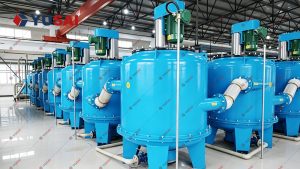
Henan Yusai Precision Machinery Co., Ltd. is a professional manufacturer dedicated to the R&D and production of precious metal extraction equipment. The company provides complete sets of professional equipment and systematic solutions covering the whole process of spent catalyst precious metal recycling, including pyrometallurgical smelting, hydrometallurgical leaching, precision component separation and deep refining. With reliable, efficient and energy-saving equipment performance, it supports standardized and large-scale production for precious metal recycling enterprises and promotes the high-quality and green development of the precious metal recycling industry.