Platinum group metals (PGMs) are core strategic resources for the global high-end chemical industry, automotive exhaust purification, new energy and precision manufacturing industries. The global industrial chain is highly dependent on the dual supply of scarce primary mineral resources and recycled secondary resources. In terms of the global resource pattern, the primary mineral resources of PGMs are highly concentrated in specific regions. China holds less than 1% of the world’s total PGM reserves but boasts a huge industrial consumption volume, resulting in a high reliance on imports and making China one of the core consumption and secondary recycling markets for PGMs worldwide. At present, secondary resource recycling has evolved from a supplementary supply method in various countries into a strategic pillar for stabilizing the global PGM supply chain. Within the global secondary resource system, spent catalysts serve as the most critical raw material for PGM recycling. The technological iteration and industrial upgrading of green recycling for spent catalysts have become a common research hotspot and a key focus of international industrial competition in the field of metallurgy and materials.
From the perspective of global industrial development, the recycling and utilization of PGMs have formed a mature international industrial system. Currently, the global recycled output of PGMs stably accounts for 20% to 30% of the primary mineral production. With the continuous accumulation of global industrial waste materials and the implementation of circular economy policies worldwide, the supply scale of recycled PGM resources will maintain a steady growth trend. Significant regional differences exist in the global recycling industry. Developed regions such as Europe, America and Japan have established sound industrial recycling systems, with the recycling rate of PGMs from mainstream materials including spent automotive catalysts remaining above 50% for a long time. Relying on complete legislative systems, standardized recycling procedures and technological advantages of leading enterprises, the application proportion of recycled PGMs continues to rise. In contrast, most developing countries have imperfect recycling systems, and the proportion of large-scale and refined recycling is less than 10%, representing the major incremental potential of the global recycling industry. In the globally adopted recycling process, accurate material analysis and testing are internationally recognized core pre-links that directly determine recycling accuracy and resource utilization efficiency. Meanwhile, pretreatment technologies including mechanical milling, high-temperature roasting and reduction modification have been widely applied by mainstream global recycling enterprises, which can effectively destroy the dense structure of materials, remove impurities and significantly improve the metal recovery rate in subsequent leaching and enrichment procedures.
In the field of hydrometallurgical recycling technology, the global process system is comprehensively upgrading toward low-carbon, environmentally friendly and high-selectivity directions. Traditionally, international PGM recycling mainly adopted cyanidation and aqua regia dissolution methods. Though mature and widely applicable, these processes are characterized by strong corrosiveness, high pollutant emissions and severe ecological hazards, and have been strictly restricted in Europe, America, Japan and other developed regions. To meet global green metallurgy standards and national environmental regulations, international research institutions and leading enterprises have continuously carried out technical research and gradually promoted advanced environmentally friendly leaching processes such as chlorination leaching, supercritical extraction and carrier dissolution. These innovative technologies effectively avoid the high-pollution drawbacks of traditional processes, conform to the global trends of carbon neutrality and resource recycling, and have become the mainstream upgrading direction of international hydrometallurgical recycling technology.
At present, the novel hydrometallurgical leaching processes have achieved industrialization and large-scale promotion in many regions worldwide. However, their inherent technical defects remain common problems facing the global industry. Industrial application data from various countries show that hydrometallurgical processes generally produce a large amount of industrial wastewater with high subsequent environmental treatment costs, and tend to release toxic and harmful gases during production, bringing great pressure on environmental supervision. In particular, these processes exhibit weak selective extraction capacity for high-value rare PGMs such as rhodium, leading to a generally low rhodium recovery rate. This causes serious waste of high-end secondary PGM resources and restricts the overall improvement of global comprehensive utilization efficiency of PGM resources.
As a core technology complementary to hydrometallurgy, pyrometallurgical enrichment is one of the mainstream processes for large-scale global PGM recycling and is widely adopted by major international precious metal recycling enterprises. The internationally adopted technical principle is as follows: lead, copper, iron, nickel matte and other substances are used as high-efficiency collectors. Under high-temperature smelting conditions, the collectors selectively combine with PGMs in materials to form stable alloys, realizing the efficient enrichment of precious metals. Inert impurities such as catalyst carriers melt and form slag at high temperatures, and the thorough separation of PGMs from carrier impurities is achieved through mature slag-metal separation technology. Featuring wide raw material adaptability, stable synchronous recovery of multiple metals and prominent large-scale production advantages, pyrometallurgical enrichment is applicable to the treatment of various types of spent catalyst materials worldwide and serves as the core technical system supporting the global supply of secondary PGM resources.
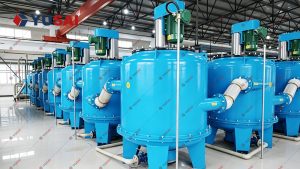
Against the global backdrop of upgraded green metallurgy and high-efficiency PGM resource recycling, professional equipment manufacturing acts as a critical foundation for technological industrialization. Henan Yusai Precision Machinery Co., Ltd. is a professional enterprise specialized in the research, development, manufacturing and customization of high-precision precious metal refining and recycling equipment. Focusing on the global pain points of low rhodium recovery rate, large wastewater discharge and insufficient automated refinement in traditional PGM recycling processes, the company provides standardized and customized intelligent refining equipment and complete production line solutions covering pre-treatment, efficient leaching, precision enrichment and environmental protection treatment. Its products are highly adaptable to spent catalyst recycling and various secondary precious metal refining scenarios, effectively helping global recycling enterprises improve PGM recovery efficiency, reduce comprehensive operating costs and achieve eco-friendly and high-value recycling of platinum group metal secondary resources.