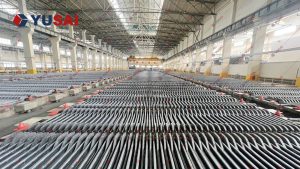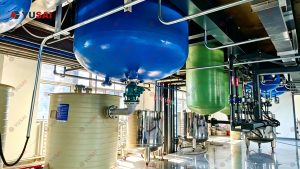
With the booming development of the new energy industry, massive retired lithium batteries have created huge recycling potential. Once neglected, waste lithium batteries are now regarded as valuable “urban mines” in the circular economy. Advanced dry physical separation technology has fully optimized traditional lithium battery recycling. Different from high-pollution, water-intensive and costly wet recycling processes, our chemical-free dry separation technology features environmental protection and high efficiency. It adopts full mechanical dry crushing and multi-stage separation to efficiently extract copper, aluminum and battery black powder. Further deep processing of black powder can recover high-value precious metals including nickel, cobalt, lithium and manganese, realizing a closed-loop, high-value recycling model for waste lithium batteries.
Traditional recycling relies on manual disassembly and chemical soaking, which brings safety risks, material loss and environmental pressure. In contrast, intelligent and fully enclosed dry separation production lines realize automatic, safe and low-loss processing. It is widely applicable to various retired power batteries and consumer lithium batteries, becoming the core technical support for the prosperous lithium battery recycling industry.
1. Dry Physical Separation: The Core Green Pretreatment Process for Lithium Battery Recycling
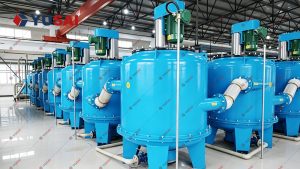
The dry separation system is a green, purely physical recycling process with zero wastewater and zero chemical additives. Utilizing the differences in density, magnetism and particle size of battery components, the equipment integrates mechanical crushing, pyrolysis impurity removal and multi-stage separation to achieve precise material dissociation and classification. All procedures are completed in a closed negative pressure environment, avoiding secondary pollution and effectively reducing energy consumption and operating costs for recycling enterprises.
The streamlined process allows direct feeding of live waste batteries without pre-discharging, greatly improving production efficiency. Batteries are first coarsely crushed into uniform particles to disassemble battery shells and pole pieces. Then low-temperature pyrolysis removes organic impurities such as electrolyte, separators and binders in a closed oxygen-deficient space, completely separating positive and negative active powder from copper and aluminum foils.
After pretreatment, materials undergo precision separation via magnetic separation, air gravity separation and vibrating screening. Magnetic separation removes iron impurities to guarantee material purity; gravity separation separates copper and aluminum particles from ultra-fine black powder by density difference. Multi-stage screening finally produces high-purity copper grains, aluminum grains and 80–200 mesh battery black powder. The harvested copper and aluminum materials are high-purity and directly tradable industrial resources.
2. Black Powder: The Core High-Value Material for Lithium Battery Recycling
Black powder is the core high-value product of lithium battery dry separation and the key to profitable recycling. It is composed of battery positive and negative active materials, concentrating core precious metal elements. Ternary battery black powder is rich in nickel, cobalt, lithium and manganese, while lithium iron phosphate battery black powder contains high-purity lithium resources. Both materials have stable market demand and outstanding recycling value.
Unlike directly tradable copper and aluminum, black powder gains maximum value through deep refining. The high-purity black powder produced by Yusai’s dry separation equipment has few impurities and stable quality, providing premium raw materials for precious metal purification. It solves common industry pain points such as high impurity content and low metal recovery rate. As indispensable new energy raw materials, nickel, cobalt, lithium and manganese are in long-term short supply, making black powder the most valuable core resource in lithium battery recycling.
3. In-depth Purification of Black Powder: Transforming Powder into High-End Precious Metals
High-purity black powder can be further refined and purified to extract precious metals. With mature technology and high recovery efficiency, the processed battery-grade raw materials can be directly applied to battery manufacturing, new material synthesis and high-end metallurgy, forming a complete industrial closed loop.
For ternary battery black powder, precise extraction, crystallization and sintering processes are adopted to separate and purify nickel, cobalt, lithium and manganese, which are then made into battery-grade lithium carbonate, nickel sulfate, cobalt hydroxide and other high-end raw materials. For lithium iron phosphate black powder, targeted lithium purification produces high-purity lithium salt resources, realizing low-cost and high-value resource regeneration.
Thanks to the high-purity raw materials from dry pretreatment, the precious metal comprehensive recovery rate reaches advanced industry standards. Compared with traditional mineral smelting, black powder metal extraction features lower energy consumption, less pollution and higher resource utilization, delivering excellent economic and environmental benefits.
4. Technology Empowers the Industry: Lithium Battery Recycling Becomes a New Circular Economy Trend
Lithium battery recycling was once a marginal industry with backward technology and low profits. Nowadays, the integrated technical system of dry physical separation and black powder precious metal purification has revitalized the industry, upgrading it from simple waste disposal to high-value precious metal regeneration.
Driven by dual-carbon policies, new energy expansion and mineral resource shortages, lithium battery recycling has become a promising track. Mature dry separation equipment and one-stop process solutions break the environmental and cost bottlenecks of traditional recycling. Intelligent, large-scale production lines greatly improve recycling efficiency and profit margins for enterprises.
Empowered by advanced dry separation technology from Henan Yusai Precision Machinery Co., Ltd., a green and profitable lithium battery recycling closed loop has been formed. Waste lithium batteries are efficiently separated into tradable copper and aluminum, while high-value black powder is refined into premium battery raw materials. Turning waste batteries into valuable “urban mines”, lithium battery recycling has become a hot investment and entrepreneurship track in the new energy circular economy.