As the core carrier of the new energy industry, lithium batteries are widely used in consumer electronics, new energy vehicles, energy storage power stations and other fields. A complete lithium battery is mainly composed of four core parts: cathode material, anode material, separator and electrolyte. These four components cooperate to realize the storage and release of electric energy, and determine the battery’s capacity, cycle life and safety performance. They are also the key objects for the resource recovery of spent lithium batteries.
- Cathode Material
The cathode serves as the lithium source of a lithium battery, directly determining the battery voltage and energy density. It contains a large amount of valuable metals and is the core processing object of battery recycling technology. The mainstream commercial cathode materials are divided into four categories:
Lithium Cobalt Oxide: Mainly applied in 3C digital batteries for mobile phones and laptops, featuring high energy density but scarce cobalt resources.
Lithium Manganate: Low cost with good safety performance but average cycle performance, mostly used in low-end power batteries and energy storage equipment.
Lithium Iron Phosphate: Possesses high thermal stability, excellent safety and long cycle life. It contains no cobalt or nickel and is widely adopted in new energy vehicles and large-scale energy storage systems.
Ternary Materials (NCM/NCA): Balance high energy density and long battery life. Widely used in passenger vehicle power batteries, they contain precious metals such as nickel, cobalt and manganese with high recycling value.
The cathode material is generally coated on aluminum foil current collectors to form battery cathode plates.
- Anode Material
The anode functions to intercalate and deintercalate lithium ions, storing lithium during charging and releasing lithium during discharging. Natural graphite and artificial graphite are the most commonly used commercial anode materials. Natural graphite has high crystallinity and high specific capacity, while artificial graphite delivers superior cycle stability and high-temperature resistance, making it more widely used in power batteries. Anode powder is coated on copper foil current collectors to form battery anode plates. In addition, new materials such as silicon-based anodes are being gradually industrialized to further improve battery capacity.
- Separator
The separator acts as a “physical barrier” inside lithium batteries, mainly made of polyolefin materials such as polyethylene (PE) and polypropylene (PP). It is a microporous polymer film that isolates the cathode and anode to prevent internal short circuits caused by direct contact. Meanwhile, the micropores on the film allow lithium ions to pass freely, ensuring normal charging and discharging cycles. With no metal value, the separator is separated and screened out during the battery crushing and sorting recycling process.
- Electrolyte
Known as the “blood” of lithium batteries, the electrolyte undertakes the function of lithium ion conduction. It mainly consists of three parts: high-purity organic solvents, lithium salt electrolytes and functional additives. Organic solvents dissolve lithium salts to provide free lithium ions, while professional additives improve cycle life, high-temperature resistance and inflation inhibition, ensuring stable and safe battery operation. Due to the corrosive nature of the electrolyte, closed negative-pressure treatment is required in spent battery recycling to avoid safety and environmental risks caused by volatile substances.
- Auxiliary Structural Components
In addition to the four core materials, lithium batteries are equipped with auxiliary accessories including shells, tabs, insulating parts and sealing rings. Prismatic batteries usually adopt aluminum shells, while pouch batteries use aluminum-plastic film shells. Battery tabs include aluminum tabs and copper tabs, serving as carriers for current output.
- Significance of Spent Lithium Battery Recycling Based on Battery Structure
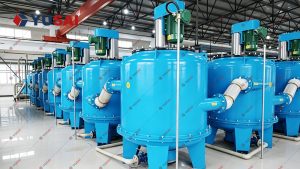
Lithium batteries contain abundant valuable resources such as nickel, cobalt, lithium, copper and aluminum. Random disposal will lead to environmental pollution caused by electrolyte leakage and serious waste of precious metal resources. Based on the material characteristics of lithium batteries, Henan Yusai Precision Machinery Co., Ltd. provides professional lithium battery crushing and sorting equipment, which adopts a combined process of hammer vibration crushing, vibrating screening and air classification. Operating in a fully closed negative-pressure environment and equipped with an intensive fine powder recovery system, the equipment realizes precise separation of cathode and anode active materials with a precious metal recovery rate of up to 98%.
The complete production line builds a high-quality green closed-loop recycling system for the full life cycle of lithium batteries. It effectively reduces mineral exploitation and solves solid waste pollution problems, realizing efficient resource regeneration and environmentally friendly disposal of spent lithium batteries.