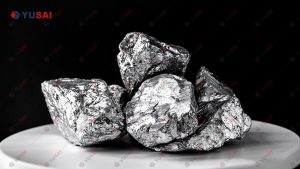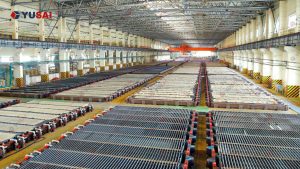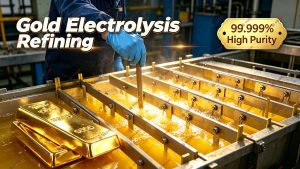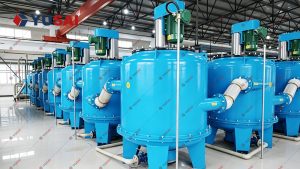
Platinum group metals (PGMs) including platinum, palladium and rhodium are strategic scarce resources for high-end manufacturing, new energy and environmental protection industries. They feature rare natural mineral reserves, high mining costs and tight global resource supply. Spent automotive exhaust catalysts serve as the most critical secondary renewable resource carrier for PGMs, containing abundant recyclable precious metals. Therefore, the regeneration and extraction of PGMs from waste automotive catalysts has become a core track in the global precious metal resource recycling industry and a key worldwide research topic to alleviate PGM resource shortages, reduce industrial production costs and realize the resource utilization of solid waste. After years of technological iteration and industrial verification, two mainstream recycling process systems, namely hydrometallurgy and pyrometallurgy, have been formed in the industry. Various subdivision technologies differ significantly in core indicators including recovery rate, energy consumption and cost, environmental protection performance, processing efficiency, equipment investment and industrialization difficulty, shaping a clear industrial technical pattern. As a professional manufacturer focusing on the full production line of precious metal refining and extraction equipment, Henan Yusai Precision Machinery Co., Ltd. has long been committed to optimizing and upgrading PGM recycling and regeneration technologies, providing high-efficiency, environmentally friendly and integrated complete production line solutions for the industry.
As an early mainstream technology for PGM recovery, hydrometallurgical extraction realizes the leaching, separation and purification of precious metals through aqueous chemical reactions. It has the advantages of low process threshold and low initial equipment investment, but prominent comprehensive industrial shortcomings, showing an obvious trend of technological elimination. The disadvantages of two typical hydrometallurgical processes, pressure cyanidation and chlorination leaching, are particularly prominent.
Although pressure cyanidation was researched and applied in the early stage due to its basic leaching efficiency, it has no practical value for industrial promotion. This process adopts cyanide to complex and leach PGMs under pressurized conditions. While it can achieve basic precious metal recovery, cyanide is a highly toxic reagent, leading to extremely difficult safety control in production and high risks of environmental safety accidents such as toxic gas leakage and wastewater pollution. In addition, the process requires harsh reaction conditions, consumes a large amount of reagents, and involves high costs for subsequent harmless treatment, resulting in poor overall economic efficiency. Meanwhile, the stability of product purity is insufficient, making it unable to meet the requirements of large-scale and green industrial production. At present, this process has basically withdrawn from industrial application scenarios.
As the core hydrometallurgical technology, chlorination leaching has been applied in small and medium-sized recycling production lines for a long time, but it is currently recognized as a phase-out technology in the industry with the tightening of global environmental protection policies and industrial upgrading. This process builds a leaching system with hydrochloric acid and oxidants to dissolve PGMs from catalysts, with the short-term advantages of mature technology and simple operation. However, its core defects are unavoidable. The production process generates a large amount of difficult-to-treat wastewater with high acidity, high salinity and heavy metal residues, as well as massive corrosive waste gas, causing severe equipment loss and rising costs of subsequent environmental governance. Furthermore, chlorination leaching delivers a limited PGM recovery rate, poor treatment effect on aged and complex waste catalysts, unstable batch production and low resource utilization efficiency. It fails to conform to the development concept of low-carbon, environmentally friendly, efficient and intensive modern industry, leading to continuous weakening of its industrial competitiveness.
In contrast to the numerous shortcomings of hydrometallurgical processes, pyrometallurgical smelting enrichment technology has become the dominant mainstream process for PGM regeneration and extraction by virtue of its strong material adaptability, stable recovery effect and compliant environmental performance, with comprehensive industrial advantages. It processes waste automotive catalysts through high-temperature smelting and realizes efficient enrichment of PGMs based on the slag-metal separation principle. It can adapt to waste catalyst raw materials of different batches, qualities and impurity contents, with far better material compatibility than hydrometallurgy. The optimized and upgraded modern pyrometallurgical process can accurately control the smelting reaction process, greatly reduce the emission of secondary pollutants, and ensure that secondary wastes such as slag and waste gas meet environmental protection standards through supporting treatment systems, fully complying with current environmental regulations.
In terms of core production indicators, pyrometallurgical smelting has outstanding advantages. It supports the synchronous recovery of multiple PGMs including platinum, palladium and rhodium with a stable high recovery rate. Its compact processing flow and short production cycle enable continuous large-scale production and greatly improve industrial processing efficiency. Although the initial equipment investment of pyrometallurgy is higher than that of hydrometallurgy, it has better overall economic and social benefits when evaluating comprehensive indicators including energy consumption, operation and maintenance costs, environmental protection costs, product qualification rate and resource utilization efficiency. At present, almost all mainstream large-scale precious metal recycling plants worldwide adopt pyrometallurgical smelting enrichment technology as the mainstream industrialization solution.
With the wide application of pyrometallurgical technology, a variety of subdivision enrichment technologies have been developed in the industry, including phase reconstruction smelting, plasma smelting, copper smelting and lead smelting. Based on different smelting principles and process systems, these technologies have their own advantages and disadvantages in terms of comprehensive resource utilization degree and technical indicators.
Phase reconstruction smelting technology accurately removes carrier impurities and enriches PGMs by regulating the phase structure of catalyst materials at high temperature. It features targeted processing, high PGM enrichment multiple and excellent product purity, making it suitable for high-end fine purification scenarios. The technology has controllable pollutant emissions and high resource utilization efficiency, but it requires strict process regulation accuracy, high automatic equipment investment and professional technical teams, forming certain barriers to large-scale popularization.
Plasma smelting adopts plasma high-temperature heat sources to realize rapid melting reactions. It has the advantages of fast temperature rise, high smelting temperature and thorough reaction, enabling efficient treatment of materials with complex impurities and presenting the strongest material adaptability and processing efficiency among all mainstream processes. This technology achieves a short production cycle and stable recovery rate, but it has relatively high energy consumption. Its core plasma equipment is expensive with high operation and maintenance costs, so it is more suitable for large-scale and high-intensity production scenarios and difficult for small and medium-sized enterprises to implement.
Copper smelting and lead smelting are traditional metal trapping smelting technologies, which mainly use copper and lead as trapping agents to form alloys with PGMs at high temperature for enrichment. Among them, copper smelting has mature technology, stable operation, moderate energy consumption, simple equipment maintenance and high comprehensive cost performance, with balanced comprehensive resource utilization capacity. It is suitable for large-scale industrial mass production and has become the most widely used pyrometallurgical subdivision process. Lead smelting has excellent trapping effect and good recovery performance for low-grade waste catalysts, but it faces high risks of lead pollution in production and requires strict supporting environmental protection facilities. Its application scenarios are gradually limited with the upgrading of green production standards.
In summary, the industrial technological iteration of PGM regeneration and extraction from automotive catalysts has been completed. Hydrometallurgical processes have gradually withdrawn from the mainstream market, and pyrometallurgical smelting technology has established a dominant position. Various pyrometallurgical subdivision processes have their own characteristics, and enterprises can select appropriate processes according to production scale, raw material quality and product positioning. Dedicated to the R&D, design and manufacturing of complete sets of precious metal refining and extraction production lines, Henan Yusai Precision Machinery Co., Ltd. focuses on solving the pain points of low recovery rate, high energy consumption and insufficient environmental protection level in traditional recycling processes. In the future, the company will further focus on energy saving and consumption reduction, intelligent regulation and in-depth resource utilization of pyrometallurgical processes. Through continuous process optimization and equipment upgrading, we will effectively improve PGM recovery efficiency, reduce production costs and strictly control environmental risks, empowering the high-quality development of the global PGM recycling industry towards scale, greenization, high-end and intelligence.