Waste palladium-carbon catalysts are common by-products of pharmaceutical, fine chemical and petrochemical hydrogenation processes. As a scarce platinum-group metal with low crustal reserves, palladium recycling from spent catalysts is critical for secondary resource utilization and precious metal supply chain security. The entire palladium recovery process consists of three core steps: enrichment, separation and refining, among which enrichment determines the overall recovery efficiency.
I. Precious Metal Enrichment
Enrichment aims to separate palladium from activated carbon carriers and remove most impurities, greatly reducing the workload of subsequent refining. Two mature technical routes are widely adopted in industrial production.
1. Pyrometallurgical Smelting
Suitable for large-scale and complex impurity materials, pyrometallurgical smelting is a proven metallurgical technology. Raw materials are crushed and pretreated to remove oil stains and carbon deposits, then mixed with flux and trapping agents for high-temperature smelting. Carbon carriers are fully oxidized and decomposed, while non-metallic impurities form floating slag. Palladium and platinum-group metals are trapped and settle as high-grade alloy concentrates via density difference.
Pros & Cons: Large processing capacity, strong material adaptability and high recovery rate; high energy consumption, requiring professional flue gas and NOx waste gas treatment systems.
2. Hydrometallurgical Leaching
Ideal for small and medium-scale production and high-palladium materials. Waste palladium-carbon is roasted at 500-800℃ to remove carbon and organic substances, producing palladium ash. Qualified leaching systems such as hydrochloric acid-hydrogen peroxide are applied for selective oxidative leaching. Palladium is converted into soluble complex ions, and pure palladium leachate is obtained after residue filtration.
Pros & Cons: Low energy consumption and negligible metal volatilization loss; consumes more chemicals and requires supporting wastewater treatment facilities.
II. Impurity Separation & Purification
Palladium concentrates still contain trace iron, copper, nickel and other platinum-group impurities. Three mainstream industrial technologies are used for precise separation:
Selective Precipitation: Adjust the pH value and redox potential of palladium solution to selectively precipitate palladium salts, separating base metal impurities by filtration. Featuring low investment and simple operation, it is widely used in small and medium production lines.
Solvent Extraction: Adopts professional organic extractants to selectively capture palladium ions in chloride medium. High-purity palladium solution is obtained through extraction and back-extraction. It supports automated continuous production and is the preferred process for large refineries.
Ion Exchange Adsorption: Uses special chelating resin to adsorb palladium complex ions. Impurity ions are removed with waste liquid, and pure palladium solution is eluted. The recyclable resin is suitable for low-concentration palladium leachate treatment.
III. High-purity Palladium Refining
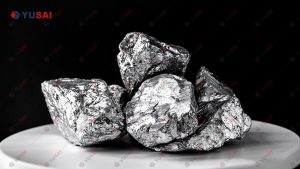
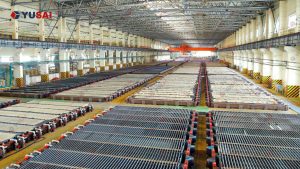
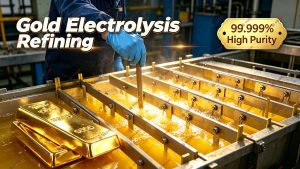
Purified palladium solution is further processed to produce high-standard palladium products. Reducing agents are added to reduce palladium ions into sponge palladium, which is repeatedly washed to remove residual salts. Finally, high-temperature calcination or professional electrolytic refining is adopted to produce 99.9%–99.99% high-purity palladium. The finished products can be reused for catalyst manufacturing, forming a complete resource recycling loop.
IV. Process Selection & Environmental Treatment
For large-scale industrial projects, the combined process of pyrometallurgical enrichment + solvent extraction is prioritized for high efficiency and stability. Small and medium-sized manufacturers usually adopt the low-cost roasting-leaching-precipitation integrated process.
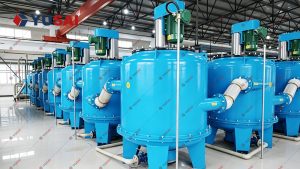
Full-process environmental protection treatment is matched: smelting flue gas and acidic waste gas are treated by professional spray tower systems; acidic wastewater is neutralized and purified to meet discharge standards; waste residues are disposed of in strict accordance with hazardous waste specifications.
V. Conclusion
The waste palladium-carbon recovery process realizes efficient regeneration of precious metals through standardized enrichment, separation and refining procedures. It effectively solves the problem of platinum-group metal resource shortage, delivers high-purity recycled palladium products, and provides environmentally friendly and economical secondary resource recycling solutions for the chemical and petrochemical industries.